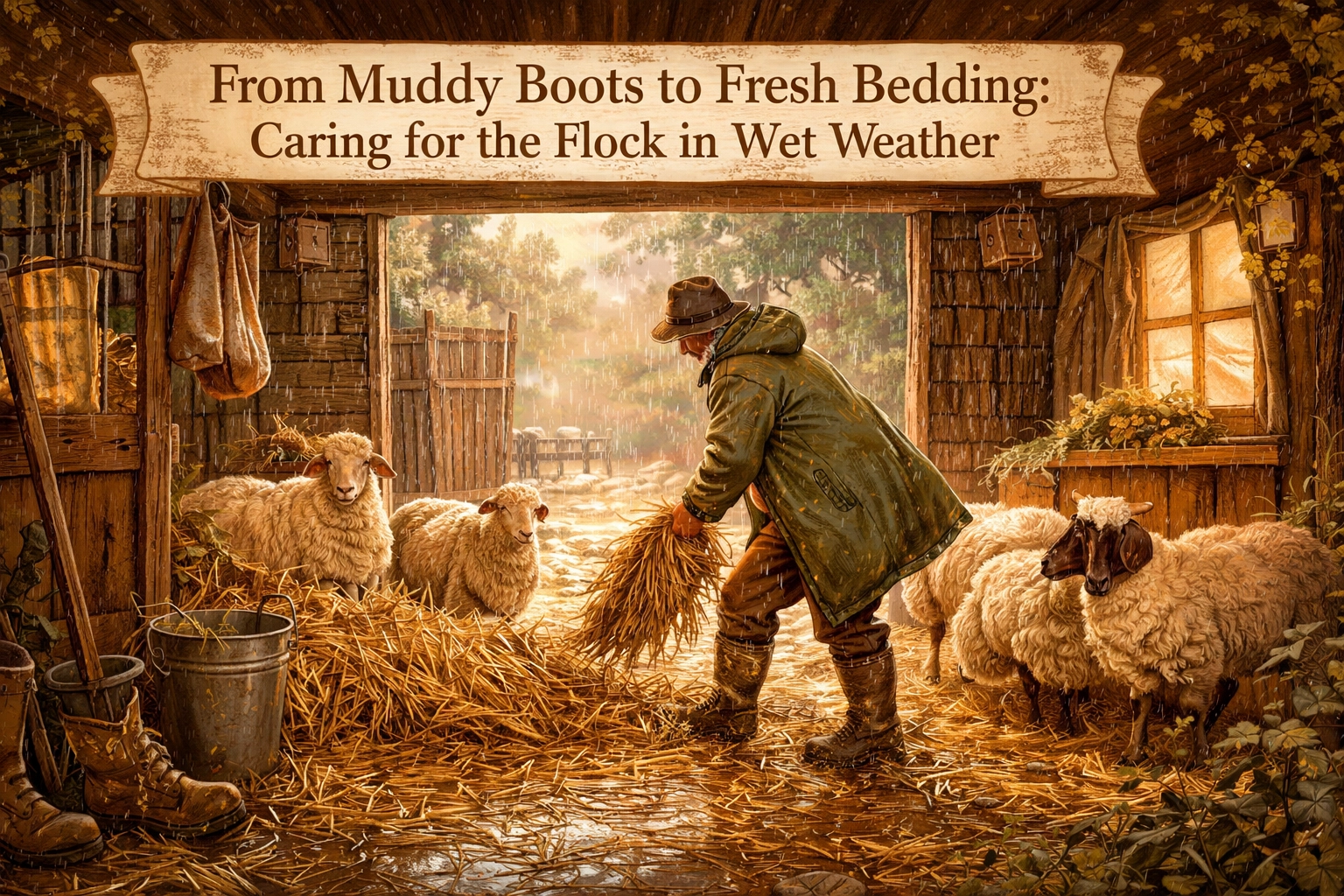
There's a particular kind of morning that every farmer knows well. The kind where you step outside and your boots sink a little deeper than expected. The air smells like rain, and the ground has that soft, squelchy quality that tells you the weather has been at work overnight.
Here at Faithful Flock Farm, we've learned to embrace these muddy seasons. Not because they're easy, they aren't. But because caring for our hens through the wet and the messy is part of what it means to be faithful stewards of the lives entrusted to us.
Today, we want to pull back the curtain on what wet weather care actually looks like. If you've ever wondered what goes into producing truly ethical eggs or why pasture raised eggs from a small farm taste different, this is part of the answer. It's not glamorous work, but it's good work.
Why Wet Weather Matters for Hens
Chickens are surprisingly hardy creatures. They handle cold better than most people expect, thanks to their feathers and their ability to fluff up and trap warm air close to their bodies.
But wet? That's a different story.
When feathers get soaked, they lose their insulating power. A wet hen is a cold hen, and a cold hen has to work harder just to maintain her body temperature. That energy has to come from somewhere, usually from the nutrients she'd otherwise put toward staying healthy and producing eggs.
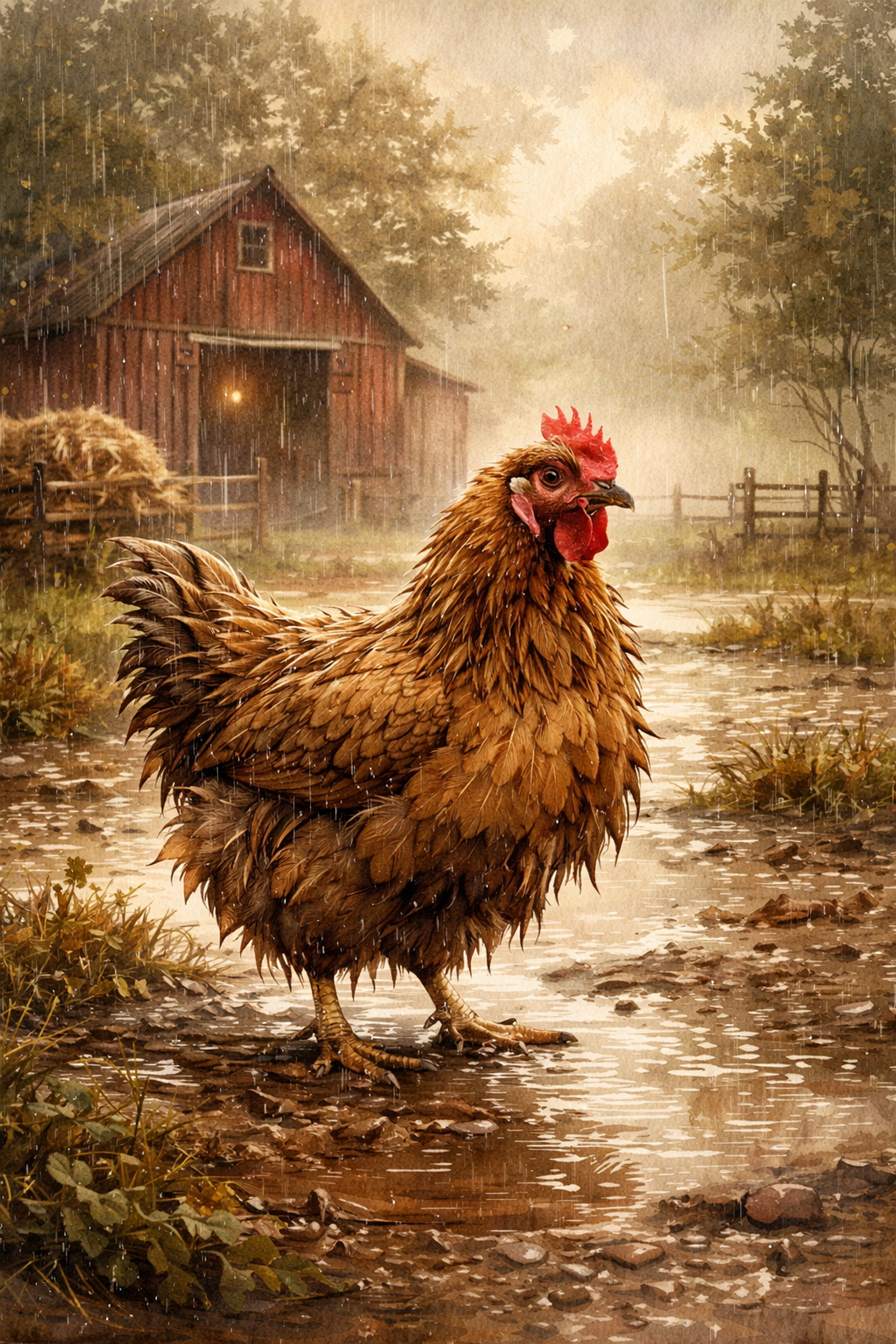
Prolonged dampness also creates the perfect environment for bacteria, mold, and parasites to thrive. Respiratory issues can develop when hens are breathing in ammonia from wet bedding. Bumblefoot, a painful infection of the feet, becomes more common when birds are standing on soggy, dirty surfaces.
In short, wet conditions demand extra attention. And that's exactly what stewardship looks like in practice.
The Heart of It, Dry Bedding
If there's one thing we've learned through rainy springs and muddy winters, it's this: fresh, dry bedding is non-negotiable.
It might seem like a small thing. Just some straw or wood shavings on the floor of a coop. But that layer of bedding is doing important work. It absorbs moisture from droppings. It provides insulation from the cold ground. It gives the hens a comfortable, dry place to rest their feet.
When the weather turns wet, we increase our bedding changes significantly. What might be a weekly task in dry summer months becomes an every-other-day routine when the rain sets in. We're looking for bedding that stays fluffy and dry, not matted and damp.
We use a deep litter method in our coops, which means we layer fresh bedding on top and allow the lower layers to slowly compost. This generates a gentle warmth and helps manage moisture. But even with this system, wet weather means we're checking more often, adding more material, and removing any sections that have gotten too damp.
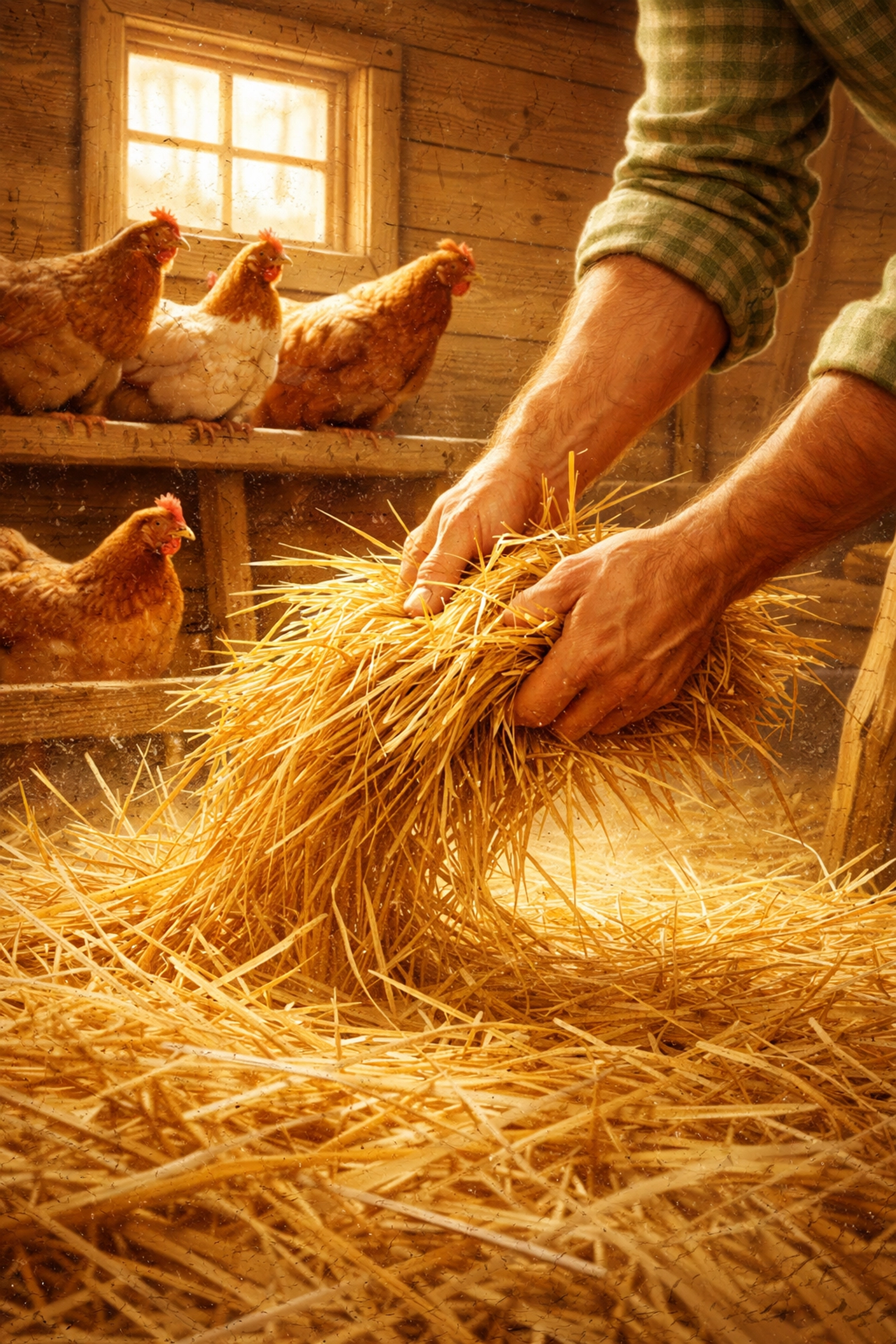
It's not complicated work. But it does require showing up, paying attention, and doing the small things consistently. Faithfulness isn't flashy, it's just showing up with a pitchfork and fresh straw, day after day.
A Day in the Life, Hands-On Care at Faithful Flock Farm
So what does wet weather care actually look like around here? Let us walk you through a typical rainy-day morning.
First light, We head out to the coops to open up for the day. Before the hens even come down from their roosts, we're checking the bedding. Is it dry? Does it smell fresh? Any damp spots near the waterers or by the door where rain might have blown in?
Mid-morning, We check again. On wet days, the hens tend to spend more time inside the coop rather than venturing out to pasture. More time inside means more droppings concentrated in one area. We scatter fresh bedding over any spots that need it.
Feed and water, We make sure feeders and waterers are positioned where they won't contribute to moisture problems. Spilled water on bedding is a recipe for trouble. We also ensure the hens have access to quality feed, wet weather means they're burning more energy to stay warm, so good nutrition matters even more.
Afternoon check, Another walk-through. We're looking at the hens themselves now. Bright eyes? Active and alert? Anyone looking hunched or puffed up in a way that suggests they're not feeling well? We check feet for any signs of irritation or infection.
Evening, Before the flock settles in for the night, we do one more bedding assessment. The goal is for every hen to have a clean, dry spot to sleep.
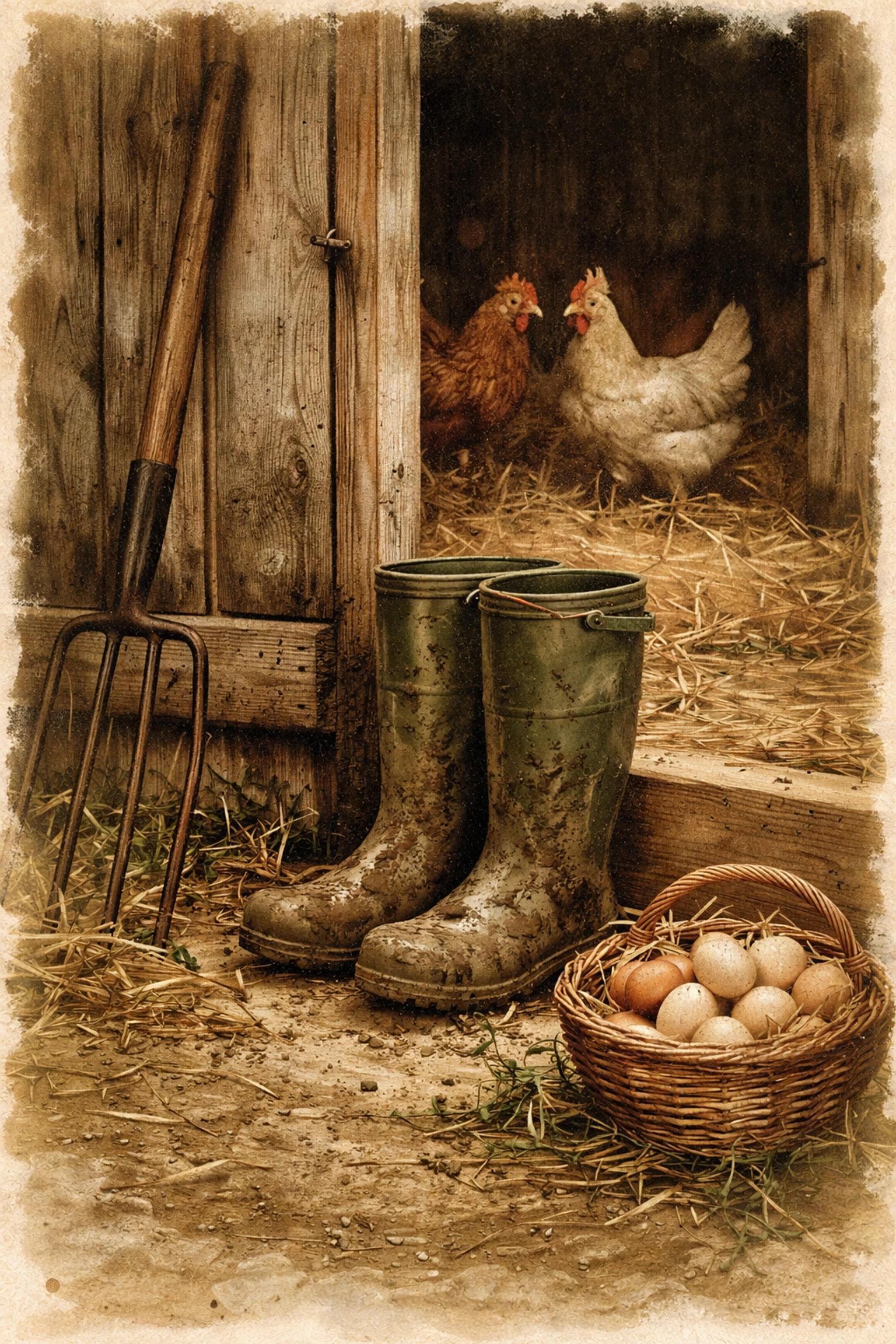
It's a rhythm. A daily yes to the work, even when it's cold and our boots are heavy with mud.
Stewardship, More Than a Buzzword
We use the word stewardship a lot around here, and we want you to know we don't use it lightly.
Stewardship means recognizing that these hens aren't really "ours" in the deepest sense. They're creatures that have been entrusted to our care. We're responsible for their wellbeing, not just when it's convenient, but especially when it's not.
The Bible tells us that "it is required of stewards that they be found faithful" (1 Corinthians 4:2). That verse shapes how we think about this work. Faithfulness isn't about perfection. It's about consistency. It's about doing the next right thing, even when no one is watching, even when the task is unglamorous.
When you choose pasture raised eggs from a farm like ours, you're choosing eggs that come from hens who are genuinely cared for. Hens who have space to roam when the weather is fair, and dry, clean shelter when it's not. Hens whose keepers see wet weather not as an inconvenience, but as an opportunity to demonstrate faithful care.
That's what ethical eggs really means to us. It's not a marketing term, it's a daily practice.
Tips for Backyard Chicken Keepers
If you're raising a small flock of your own, here are a few things we've learned about wet weather care:
Prioritize ventilation. It sounds counterintuitive, but good airflow in the coop is essential even in wet weather. You want moisture and ammonia to escape, not build up. Just make sure the ventilation is positioned so drafts don't blow directly on roosting hens.
Use absorbent bedding. Pine shavings, straw, and hemp bedding all work well. Avoid materials that mat down easily or don't absorb moisture effectively.
Create dry zones outside. If possible, set up covered areas where hens can be outdoors without standing in mud. A simple tarp or roof extension can make a big difference.
Check feet regularly. Look for any redness, swelling, or scabs on the foot pads. Catching bumblefoot early makes treatment much easier.
Don't skimp on nutrition. Consider offering a little extra feed during cold, wet spells. Your hens are working harder to stay warm and healthy.
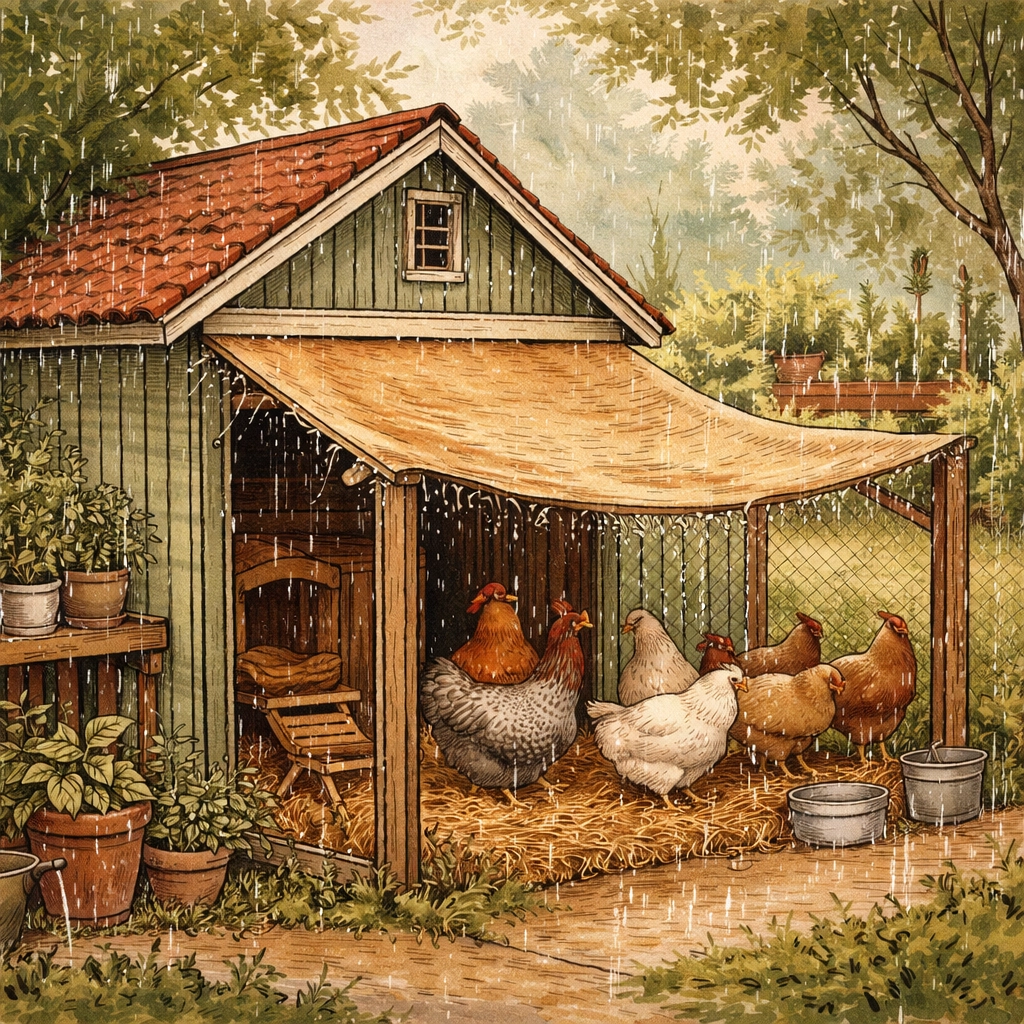
The Quiet Work
There's something grounding about this kind of care. It's not the stuff that makes for exciting social media posts. No one's going viral over a photo of fresh wood shavings.
But there's a deep satisfaction in it. In knowing that you've done right by the creatures in your care. In stepping back from a clean, dry coop and watching the hens settle in contentedly for the night.
This is the quiet work of farming. The steady, faithful showing up. And we wouldn't trade it for anything.
If you'd like to see more of daily life here at Faithful Flock Farm, we'd love to have you visit our photo gallery or check out our latest farm updates. And if you're interested in bringing home a dozen of our farm-fresh eggs, head over to our products page to learn more.
One little update we’re excited to share, our upcoming book, When God Plants a Farm, is releasing Valentine’s weekend. It’s been shaped by the same quiet lessons we learn in the coop, that stewardship is often lived out in small, faithful choices.
Even in the muddy storms of farm life, we’ve found there’s a bigger purpose at work. The kind you can’t always see in the moment, but you can trust as you keep showing up.
Thank you for being part of this journey with us. 🤍
"Moreover, it is required of stewards that they be found faithful."
, 1 Corinthians 4:2 (ESV)
Leave a Reply