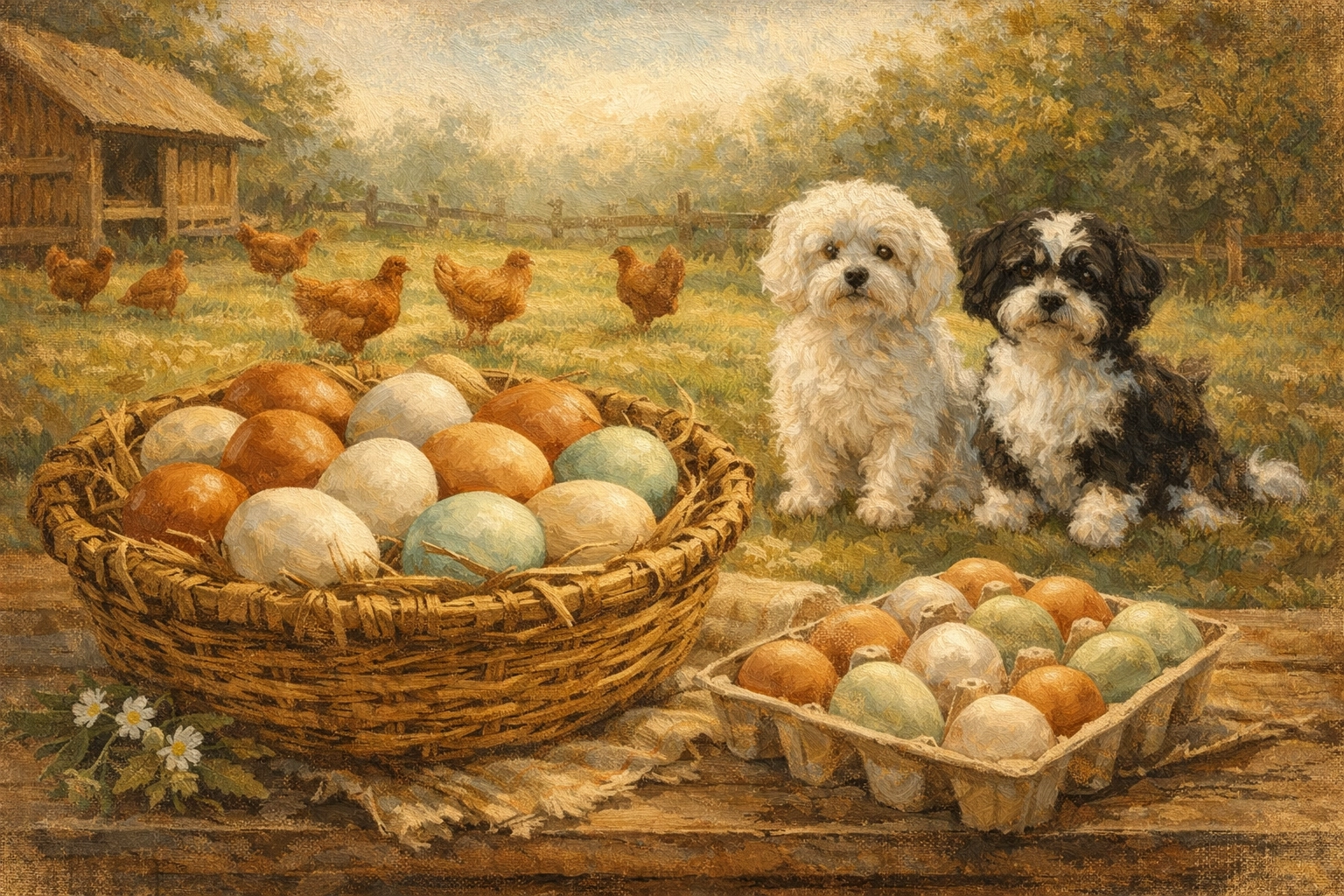
We love the look on people's faces when they open our egg cartons for the first time.
"Wait, are those really green?" they ask, eyes wide with surprise.
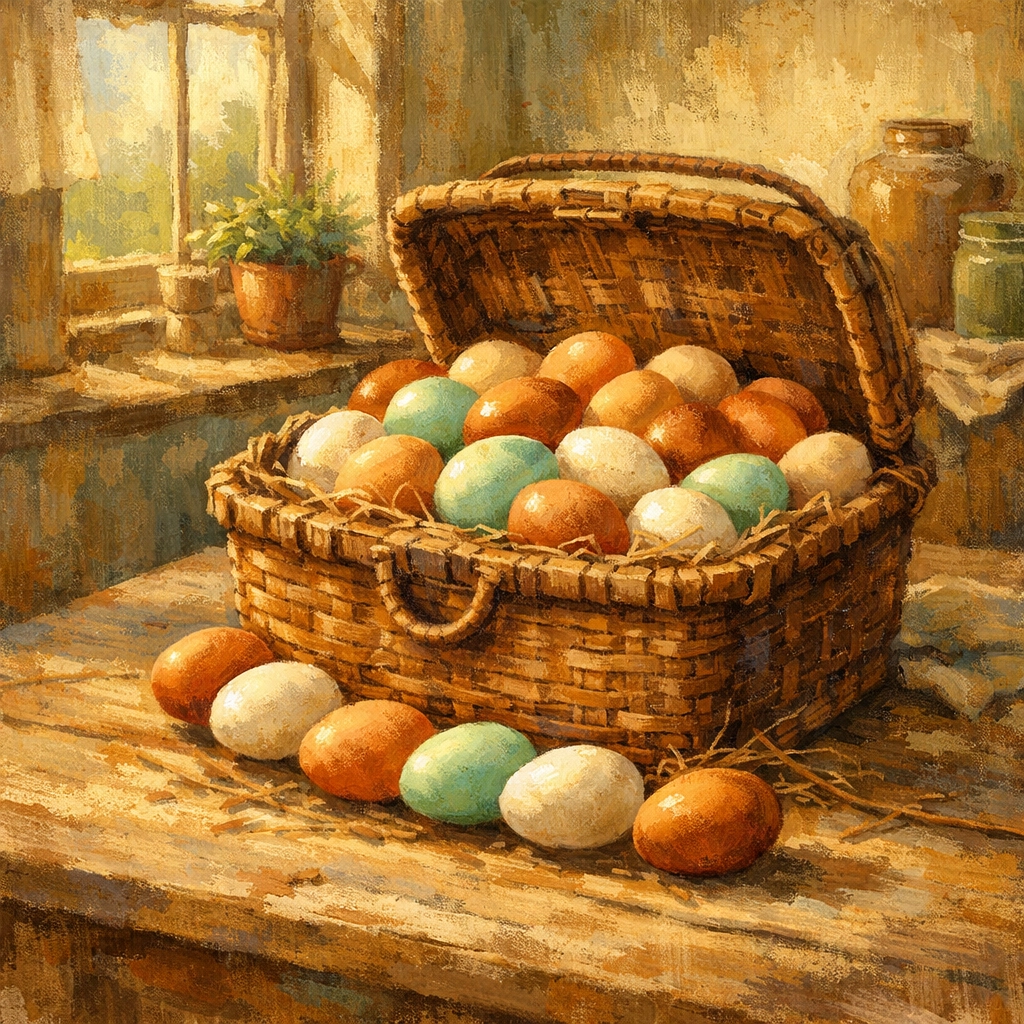
Yep! Here at Faithful Flock Farm, our eggs come in a rainbow of colors, warm browns, classic whites, and those gorgeous blue, green beauties that look like they belong in an Easter basket. And if you've ever wondered whether brown eggs are healthier than white eggs (or if green eggs are some kind of farm magic), we're here to set the record straight.
Spoiler alert, it's all about the hen who laid it.
The Great Brown Eggs vs White Eggs Debate
Let's clear this up right away, there's no nutritional difference between brown and white eggs.
None. Zero. Zilch.
The color of an eggshell has absolutely nothing to do with how healthy, tasty, or "natural" it is. You're not getting extra vitamins from a brown egg, and white eggs aren't bleached or processed to look that way (that's a myth we hear all the time).
So why do some eggs come out brown and others white?
It's simple, the breed of chicken determines the shell color. That's it.
All eggs actually start out white inside the hen. But as the egg travels through her reproductive system, certain breeds deposit pigments on the shell surface. Hens that produce a pigment called protoporphyrin lay brown eggs. Hens that don't produce that pigment? Their eggs stay white.
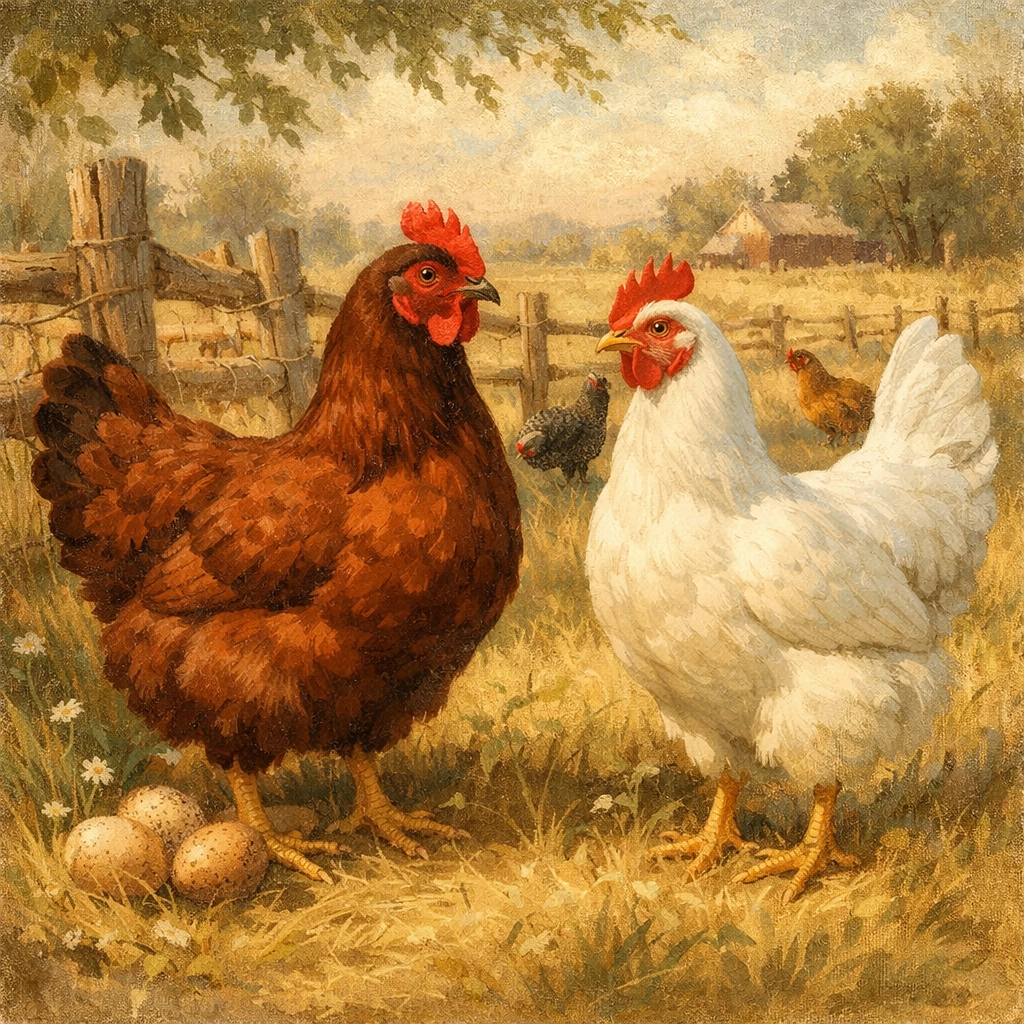
Here's a fun rule of thumb, chickens with red or brown feathers and red earlobes usually lay brown eggs. Think breeds like Rhode Island Reds, Speckled Sussex, or Black Australorps. Chickens with white feathers and white earlobes, like White Leghorns, lay white eggs.
But then there are our special hens.
Why We Sell Green Eggs (And Love Every Single One)
If brown hens lay brown eggs and white hens lay white eggs, where on earth do green eggs come from?
Great question.
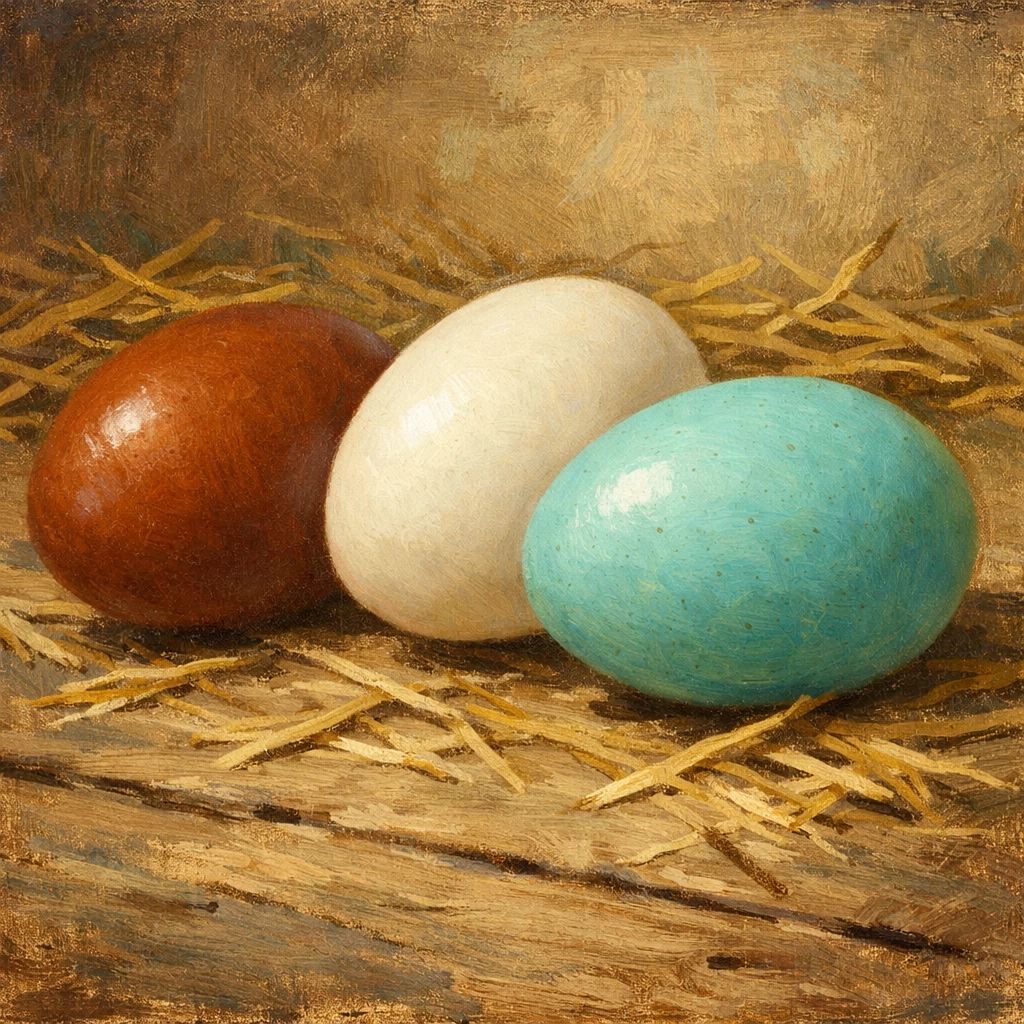
Some heritage chicken breeds, like Araucanas, Ameraucanas, and Olive Eggers, produce eggs in stunning shades of blue, green, and even olive. These colors come from completely different pigments, like oocyanin (which creates that beautiful blue, green hue).
Our green and blue egg layers are some of the most fun members of our flock. They're quirky, friendly, and lay the prettiest farm fresh eggs you've ever seen. When customers spot them in a carton, they almost always smile. It's hard not to, they just look happy.
And honestly? We think that's part of what makes farm life so special. There's something joyful about variety, about seeing nature's little surprises show up in your egg basket every morning.
What Actually Makes Eggs Taste Better
Okay, so if shell color doesn't matter, what does?
Here's what really makes a difference when it comes to egg quality and flavor:
The hen's diet. Chickens that forage on pasture, eating grass, bugs, seeds, and all the good stuff nature provides, produce eggs with richer, more flavorful yolks. You'll notice the difference the moment you crack one open. Those deep orange yolks? That's the result of a varied, natural diet.
Freshness. Farm fresh eggs taste better than store bought eggs, period. Our eggs go from nest to carton to your kitchen in days, not weeks. That freshness shows up in the taste and texture every single time.
The hen's lifestyle. Our girls spend their days roaming on pasture, scratching in the dirt, dust bathing in the sun, and just being chickens. They're healthy, happy, and stress free. We believe you can taste that care in every egg.
Whether you're cracking a brown egg, a white egg, or one of our gorgeous green ones, it's the pasture-raised lifestyle that makes them delicious, not the color of the shell.
A Little Slice of Farm Life
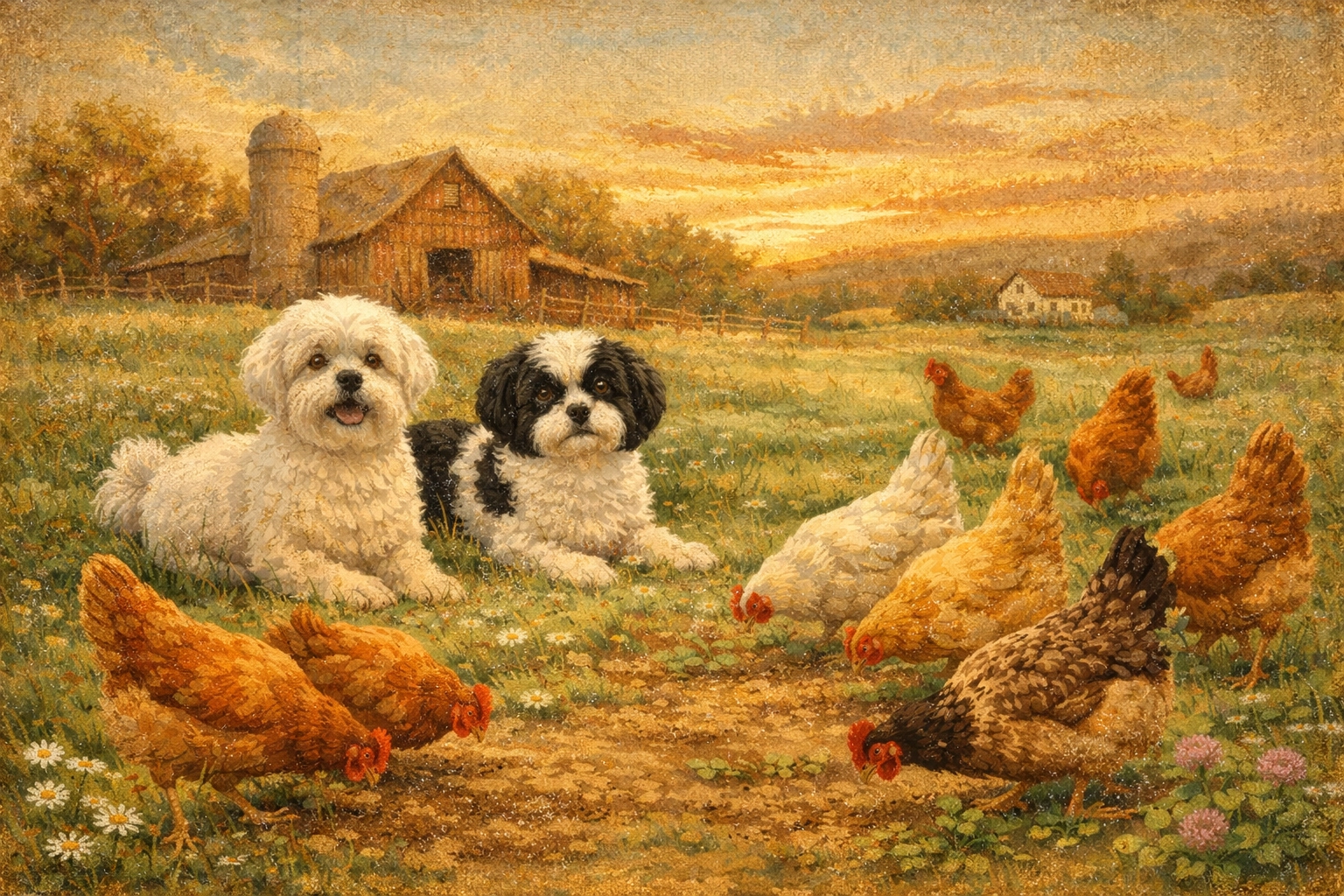
Speaking of life on pasture, our small but mighty farm dogs, Milo (our Maltese) and Panda Bear (our black and white Shih Tzu), take their job very seriously when it comes to watching over the flock. Milo's usually the one patrolling the perimeter, while Panda Bear likes to camp out near the coop, keeping a gentle eye on the hens.
It's pretty sweet to watch them work. The chickens trust them completely, and honestly, we do too.
Every morning when we collect eggs, we're reminded how much goes into producing something as simple, and as wonderful, as a fresh egg. It's not just the hens doing the work. It's the pasture, the weather, the guardians, the daily care. It all comes together in those beautiful little packages.
And when we hand you a carton with brown, white, and green eggs all nestled together? That's the whole farm, right there in your hands.
What to Do With All Those Colorful Eggs
So you've got your mixed carton of farm fresh eggs, now what?
Use them however you like! Scramble them, fry them, bake with them, boil them for salads. The color of the shell doesn't change how they cook or taste. Inside, they're all the same, rich, creamy, and absolutely delicious.
Some folks like to keep the colors separated for fun, green eggs for deviled eggs at a party, brown eggs for baking, white eggs for a classic breakfast plate. Others love the look of a rainbow scramble. There's no wrong way to enjoy them.
And if you're wondering whether kids will eat green eggs, the answer is almost always yes. There's something about the novelty that makes them exciting. We've had parents tell us their picky eaters suddenly became egg fans after seeing those blue, green shells. Dr. Seuss knew what he was doing.
The Bottom Line on Egg Colors
Here's what you need to remember when it comes to brown eggs vs white eggs (and green ones too),
- Shell color = chicken breed. That's it. It's genetics, not nutrition.
- All our eggs are pasture-raised. That's what makes them special, not the color.
- Freshness and lifestyle matter most. Happy hens on healthy pasture make better eggs, plain and simple.
- Green and blue eggs are real. They're not dyed, not fake, just naturally beautiful.
We're grateful every single day that we get to raise these hens, care for this land, and share the results with our community. If you haven't tried our farm fresh eggs yet, we'd love for you to stop by or place an order. Whether you end up with a carton full of browns, whites, greens, or a mix of all three, we think you'll taste the difference that pasture-raising makes.
Come visit us at Faithful Flock Farm to learn more about our flock, see what's available, or just say hello. We're always happy to talk chickens (and eggs, and guardian dogs, and everything in between).
Because at the end of the day, it's not about the color on the outside. It's about the care that goes into every single egg, and the joy of sharing that with you.
"Every good and perfect gift is from above, coming down from the Father of the heavenly lights, who does not change like shifting shadows." , James 1:17
Leave a Reply