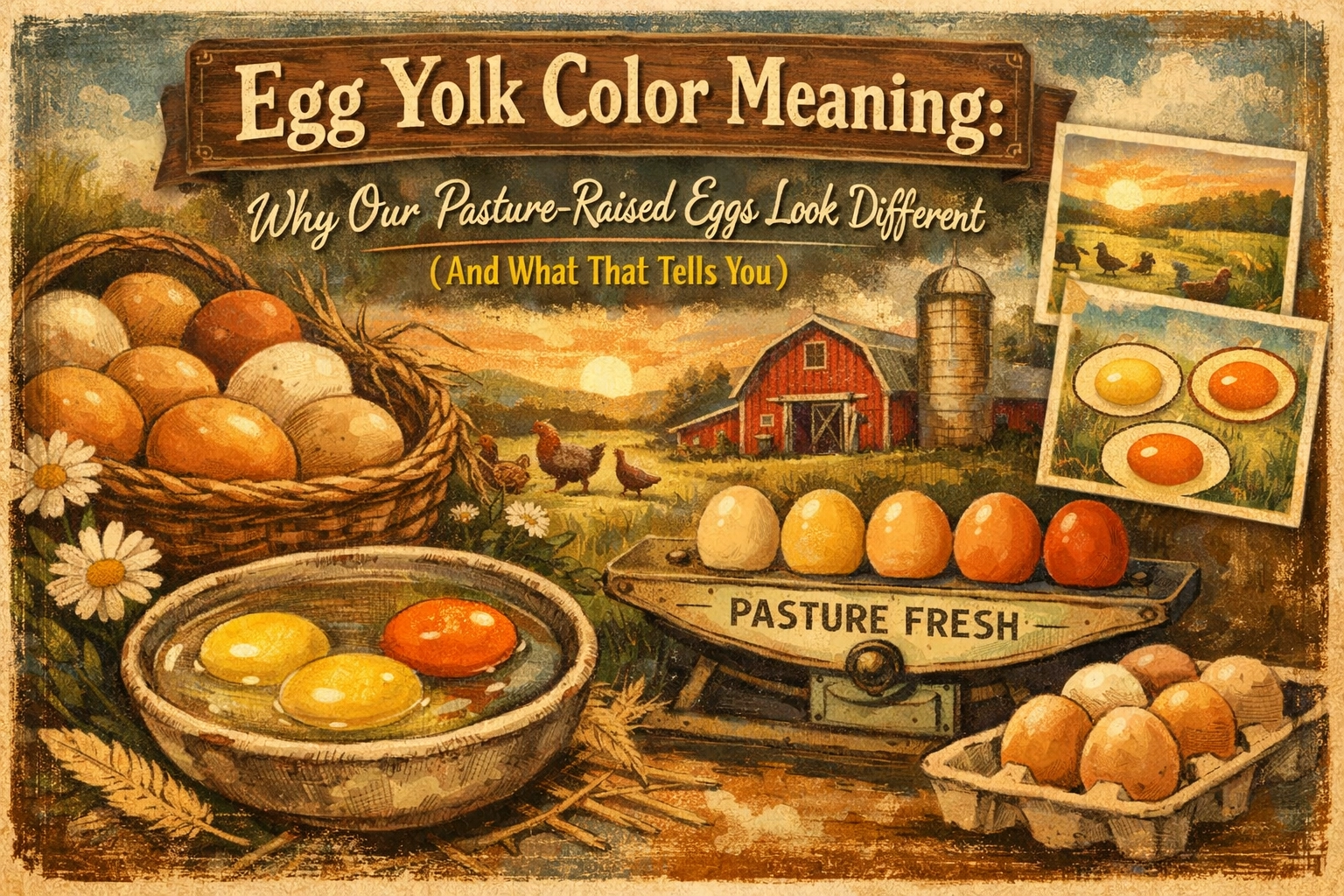
Have you ever cracked open one of our eggs and noticed that gorgeous, deep orange yolk staring back at you?
We hear about it all the time. Folks pick up a carton at the market, take them home, and then send us photos saying, "Wow, I've never seen yolks this color before!"
It's one of those little moments that makes us smile every single time. Because that vibrant orange isn't just pretty to look at. It's a window into how our hens are living, what they're eating, and the kind of care we're committed to here at Faithful Flock Farm.
Today, we want to pull back the curtain and share what egg yolk color meaning really tells you, why our pasture raised eggs look so different from what you might find at the grocery store, and what it all means for you and your family.
What Actually Determines Egg Yolk Color?
Here's the simple truth: egg yolk color comes from what the hen eats.
It's not about the breed of chicken. It's not about the color of the shell. And it's not some magic trick. The yolk color is determined almost entirely by the hen's diet, specifically by compounds called carotenoids.
Carotenoids are natural pigments found in plants, the same ones that make carrots orange and spinach green. When hens eat foods rich in these pigments, like fresh grass, clover, insects, seeds, and leafy greens, those carotenoids get deposited right into the yolk.
The more access a hen has to diverse, pigment-rich foods, the deeper and richer that yolk color becomes.
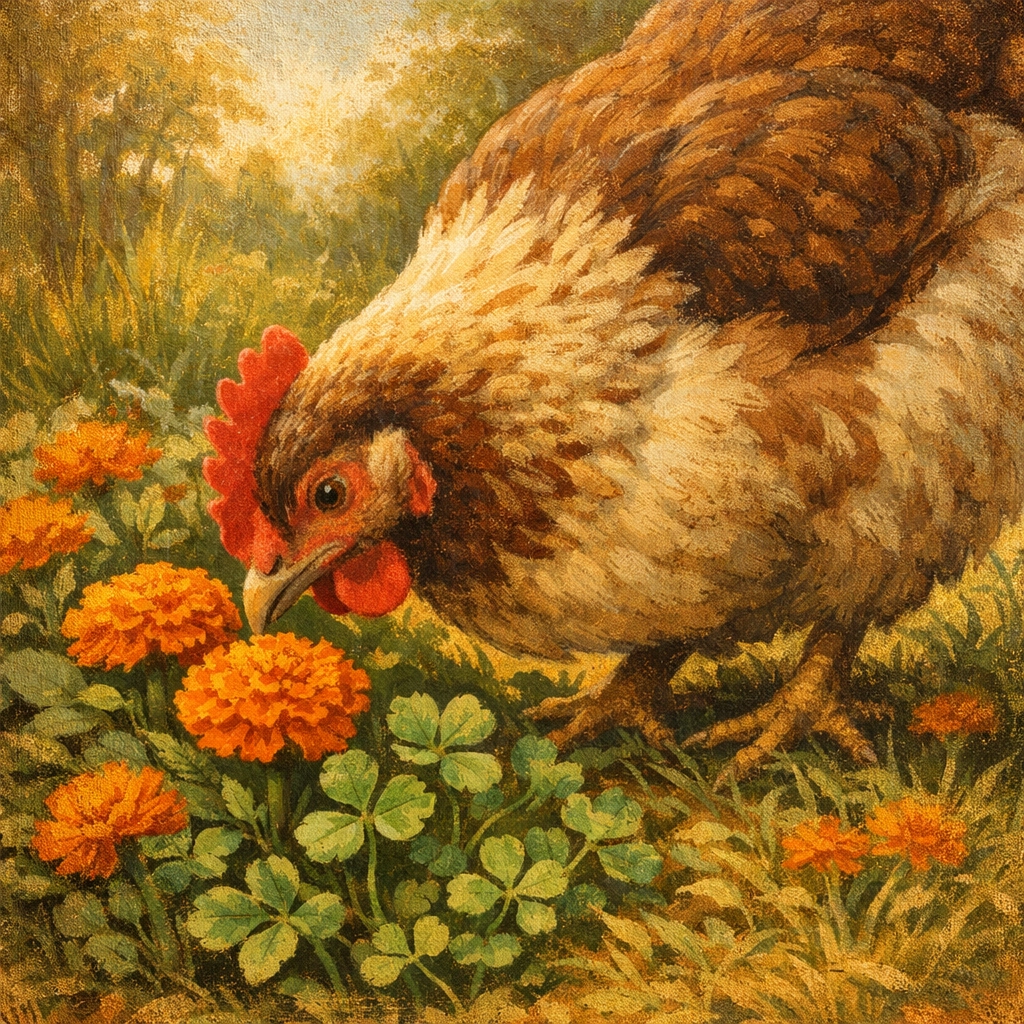
On the flip side, hens fed primarily grains like wheat or corn without access to pasture will lay eggs with pale yellow yolks. There's nothing wrong with those eggs, but the color tells you something about how that hen spent her days.
Why Our Pasture Raised Eggs Have Deep Orange Yolks
Our girls spend their days doing what chickens were created to do: scratching, pecking, foraging, and exploring.
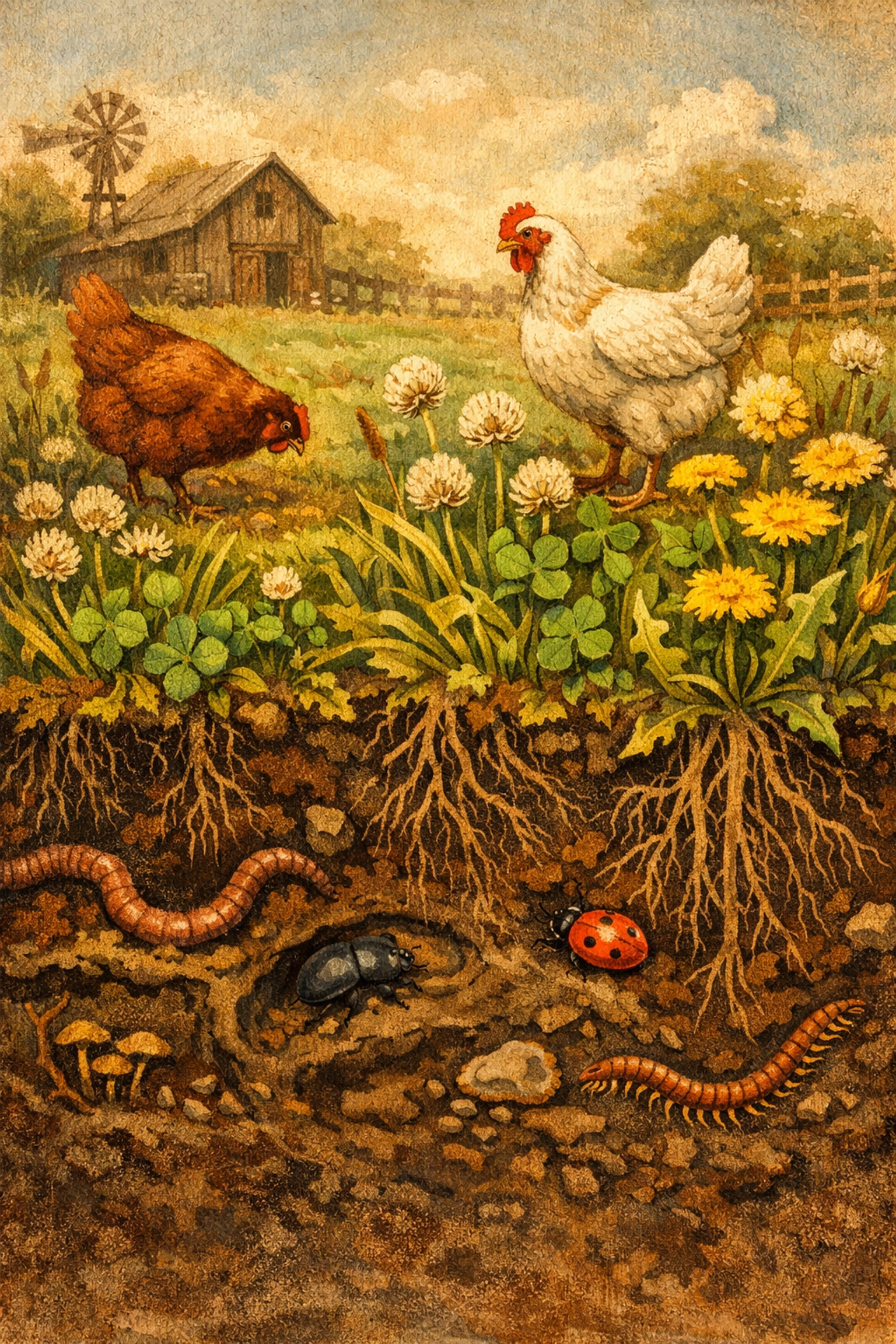
Every morning, we let them out onto fresh pasture where they have access to grasses, clover, dandelions, bugs, worms, and whatever else catches their eye. They're constantly on the move, heads down, searching for their next snack.
This natural diet, rich in carotenoids from all that green vegetation and insect protein, is what gives our eggs those beautiful deep orange yolks. It's a sign that our hens are living healthy, active lives with plenty of variety in their diet.
We also supplement their forage with quality feed to make sure they're getting complete nutrition, but that pasture time makes all the difference. You can see it in the yolk color, and honestly, you can taste it too.
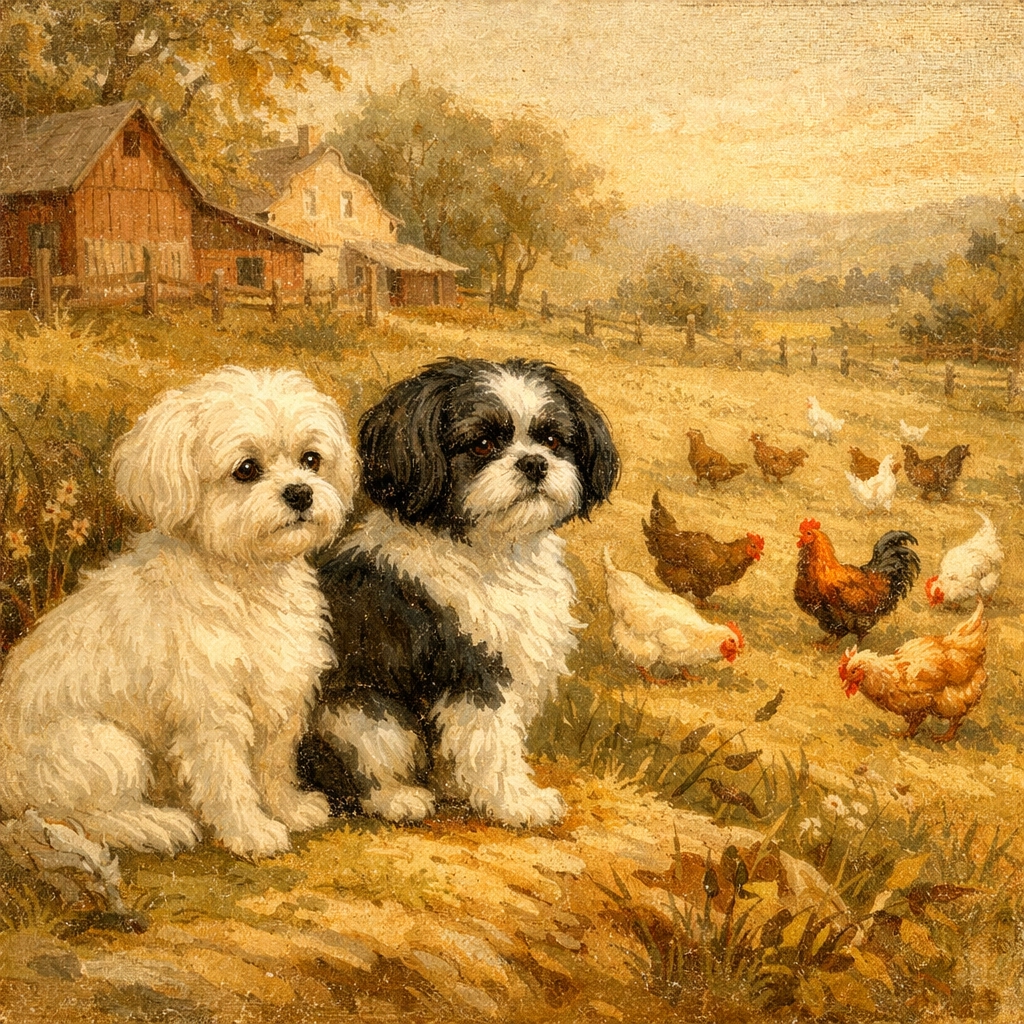
Our two farm dogs, Milo (our white Maltese) and Panda Bear (our black and white Shih Tzu), keep a watchful eye on the flock while they forage. They might be small, but they take their job seriously, and the hens seem to appreciate having those loyal companions around.
The Nutrition Question: Are Darker Yolks More Nutritious?
This is where we want to be really honest with you.
There's a common belief that darker, orange yolks are more nutritious than pale yellow ones. We've heard it too, and for a long time, we assumed it was true.
But here's what the research actually shows: orange and yellow yolks have nearly identical nutrient profiles.
A study that tested over 100 eggs found that for 95% of the nutrients measured, there was no difference between orange and yellow yolks. In fact, yellow yolks actually contained slightly higher levels of riboflavin (Vitamin B2), likely because of the yellow pigmentation itself.
All egg yolks, regardless of color, contain the same essential nutrients: fat-soluble vitamins A, D, E, and K, omega-3 fatty acids, choline, B vitamins, and yes, carotenoids. The nutritional powerhouse of an egg is in that yolk, no matter what shade it happens to be.
So if yolk color doesn't mean better nutrition, why does it matter?
What Yolk Color Really Tells You
While darker yolks don't necessarily pack more nutrients, they do tell you something important: that hen had access to a more diverse, natural diet and better living conditions.
And that matters for a lot of reasons beyond just nutrition.
When you see those deep orange yolks in our pasture raised eggs, you're seeing evidence of a hen who lived well. She had space to move. She had variety in her diet. She was able to express her natural behaviors, the ones God designed her with.
For us, farming is about stewardship. We believe we're called to care for these animals with intention and respect. That means giving them the best life we possibly can, not just meeting minimum standards.
Choosing ethical eggs from farms like ours means you're supporting that kind of care. You're saying yes to farming practices that prioritize animal welfare, environmental health, and honest, transparent relationships between farmers and families.
The yolk color is just one visible sign of that bigger picture.
A Faith-Based Approach to Raising Hens
We often talk about being stewards rather than just owners, and that's not just language for us. It's how we see our role here.
These hens aren't just egg-producing machines. They're living creatures entrusted to our care, and we take that responsibility seriously.
Every decision we make, from how much space they have to what they eat to how we protect them from predators, comes back to that question: Are we caring for them the way we're called to?
Letting them out on pasture isn't just about yolk color or even egg quality. It's about letting them be chickens, fully and completely. It's about working with creation rather than against it.
And honestly, there's something deeply satisfying about watching them thrive. Seeing them run across the grass, dust-bathing in the sun, or settling in for the evening roost, it reminds us why we do this work.
What to Look for When Buying Eggs
If you're shopping for eggs and trying to figure out what to buy, here are a few things we'd encourage you to consider:
Look beyond the label. Terms like "cage-free" or "free-range" can be misleading. They don't always mean what you think they mean. If possible, buy from farms where you can see how the hens are actually living.
Ask questions. Where do the hens spend their time? What do they eat? How much outdoor access do they have? Good farmers love talking about their practices.
Visit if you can. There's nothing quite like seeing a farm in person. We welcome visitors here at Faithful Flock Farm because we want people to see exactly how we're raising our flock.
Crack one open. That yolk color will tell you a lot. If you see deep orange or dark yellow, you know that hen had access to good forage and a varied diet.
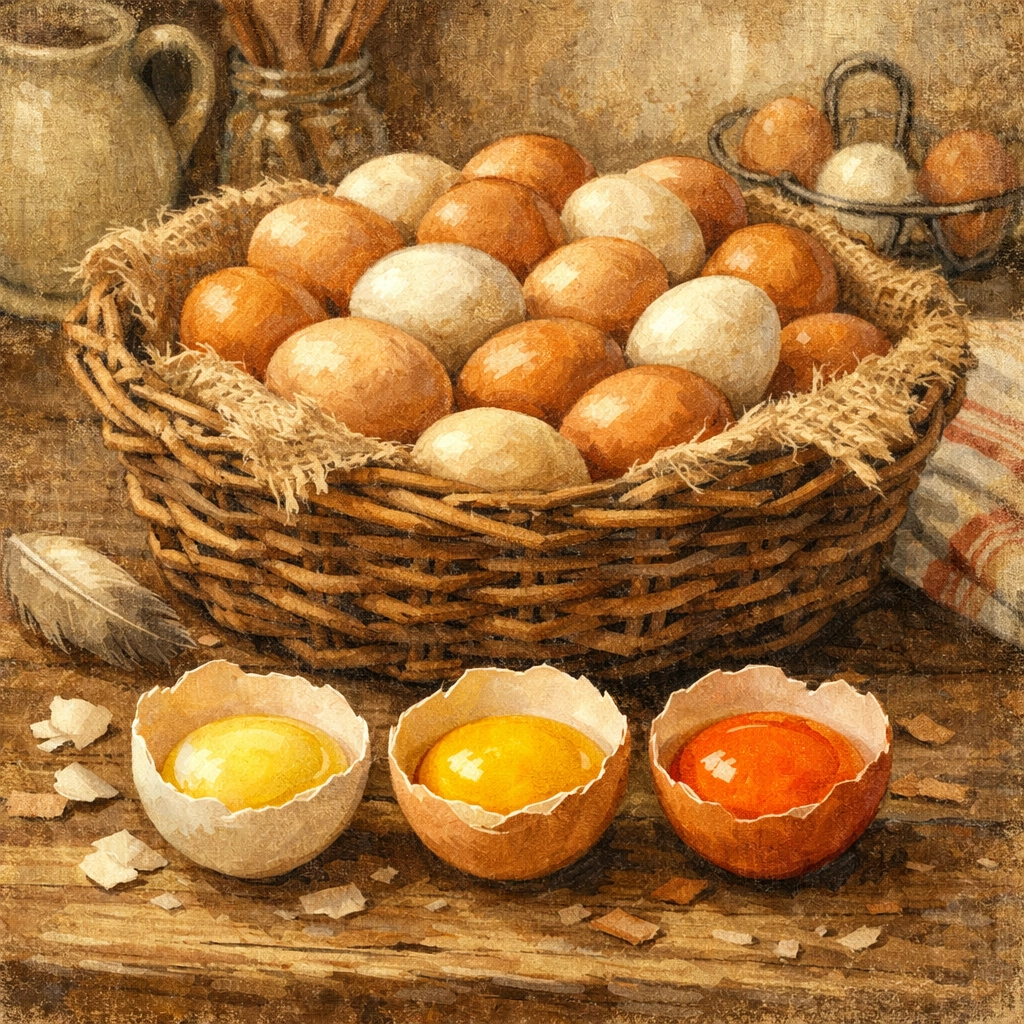
And if you're local to us, we'd love for you to try our eggs. You can learn more about our products and availability here.
The Bottom Line on Egg Yolk Color Meaning
So here's what we want you to take away from all this:
Egg yolk color is a reflection of the hen's diet and living conditions, not necessarily higher nutrition for you. But it does matter because it tells you how that hen lived her life.
Our pasture raised eggs with their deep orange yolks are a sign of hens who forage freely, eat a diverse natural diet, and live the way chickens were meant to live.
When you choose ethical eggs from small farms practicing good stewardship, you're supporting a food system that values care, transparency, and doing things the right way, even when it's not the easiest way.
That's what we're committed to here. That's what those orange yolks represent.
We're grateful for every family who chooses to support our farm and our farming practices. It means we get to keep doing this work we love, and it means more hens get to live good lives.
If you have questions about our eggs, our farm, or anything else, please don't hesitate to reach out to us. We're always happy to chat.
"The earth is the Lord's, and everything in it, the world, and all who live in it." – Psalm 24:1
Leave a Reply