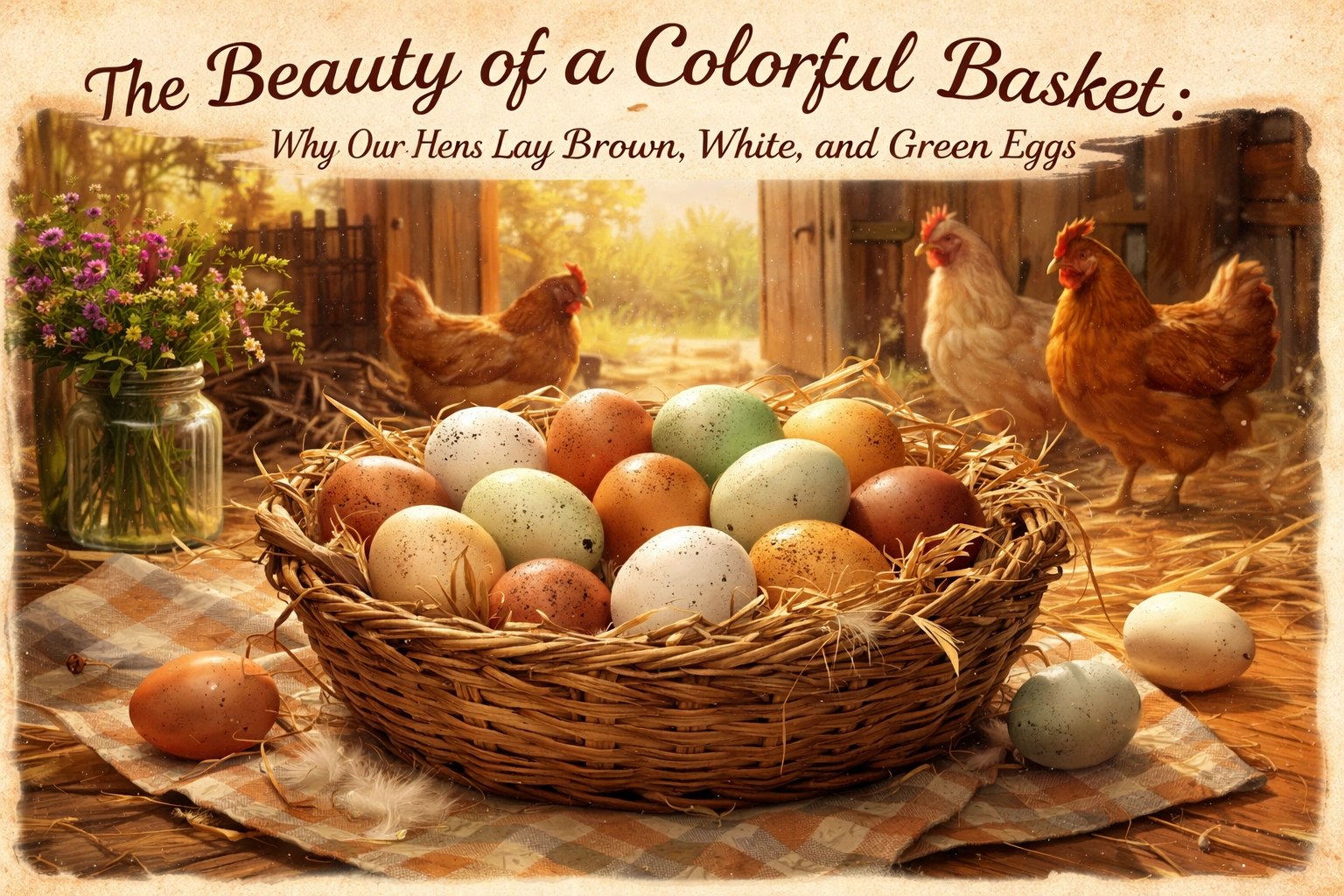
There's something special about gathering eggs in the morning.
The coop is quiet. The hens are clucking softly. And when we lift the lid to the nesting boxes, we're greeted by a little collection of treasures, brown, white, and green, all nestled together like a gift waiting to be discovered.
If you've ever picked up a carton of farm fresh eggs and noticed that beautiful variety of colors, you might have wondered: Why are some eggs brown and others white? And where on earth do green eggs come from?
We get asked these questions all the time at Faithful Flock Farm. And honestly? We never get tired of answering. Because the story behind egg colors is one of our favorite reminders that God's creation is endlessly creative, beautifully diverse, and always worth celebrating.
The Simple Answer: It's All About the Breed
Here's the wonderful truth: the color of an eggshell is determined entirely by the breed of the hen who lays it.
That's it. No fancy feed. No special lighting. No farm tricks.
Each hen is born with the genetics to lay one specific color of egg for her entire life. A hen who lays brown eggs will always lay brown eggs. A hen who lays white eggs will always lay white eggs. And those lovely green egg layers? They'll keep blessing us with green eggs from their first lay to their last.
It's written into their design from the very beginning.
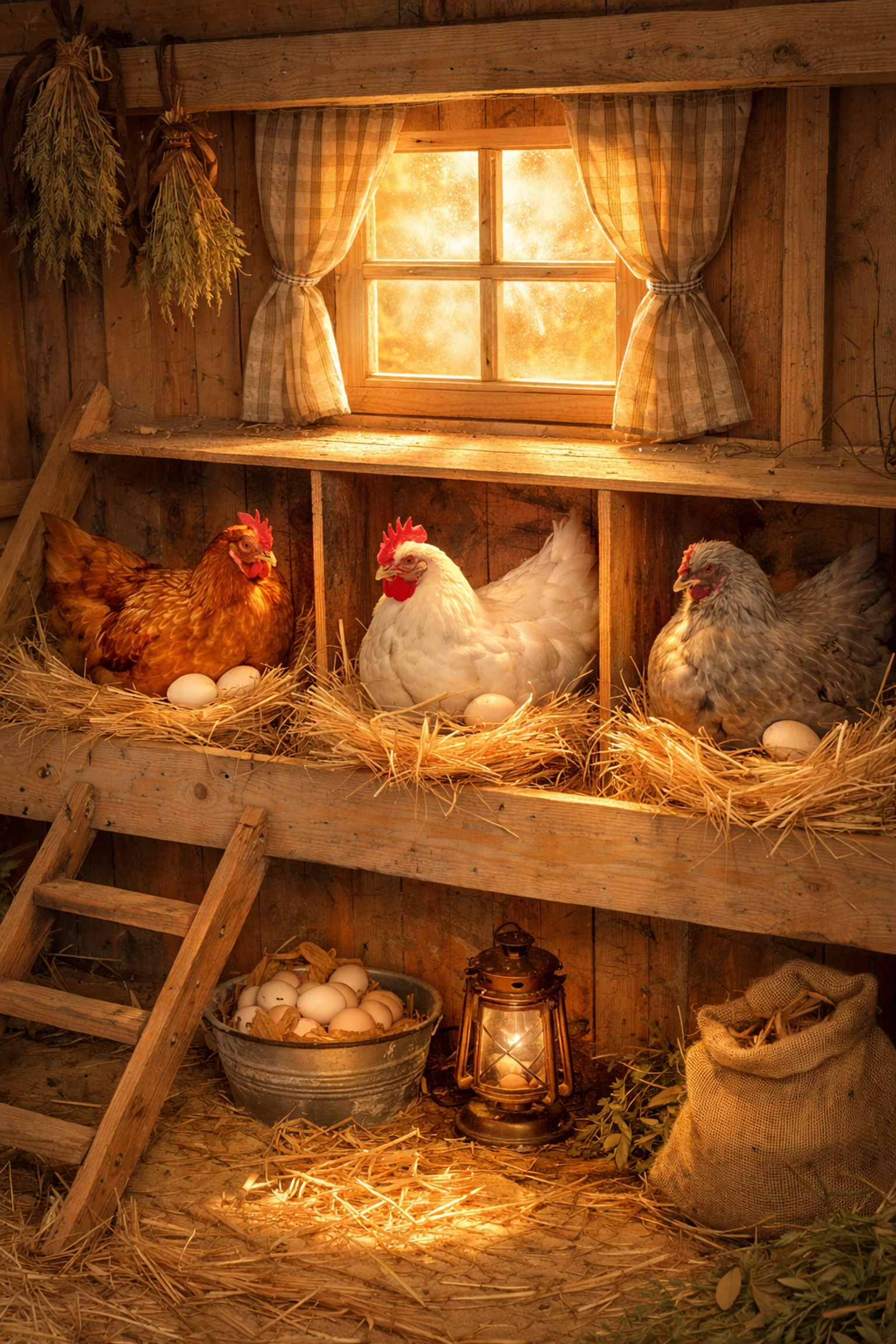
Brown Eggs vs White Eggs: What's the Difference?
One of the most common questions we hear is about brown eggs vs white eggs. People often assume that brown eggs are healthier, more natural, or somehow "better" than white ones.
We understand why! Brown eggs look more rustic. They feel more farm-y. And for years, marketing has told us that brown means wholesome.
But here's the honest truth: the color of the shell has absolutely nothing to do with the nutritional value of the egg inside.
A white egg and a brown egg from hens raised the same way, eating the same diet, will be nutritionally identical. The difference is purely cosmetic, a matter of pigment, not protein.
How Brown Eggs Get Their Color
Brown eggs come from breeds like Rhode Island Reds and Plymouth Rocks. These hens produce a pigment called protoporphyrin during the egg-forming process.
Here's the fascinating part: this brown pigment is applied to the shell late in development, almost like a coat of paint right before the egg is laid. That's why if you crack open a brown egg, you'll notice the inside of the shell is actually white!
The brown color is only on the outside. It's a beautiful finishing touch, but it doesn't change what's inside.
Why White Eggs Are White
White eggs are the "default" color, you might say. Breeds like Leghorns don't produce any pigment during shell formation, so the shell stays its natural calcium-white color all the way through.
White on the outside, white on the inside. Simple and pure.
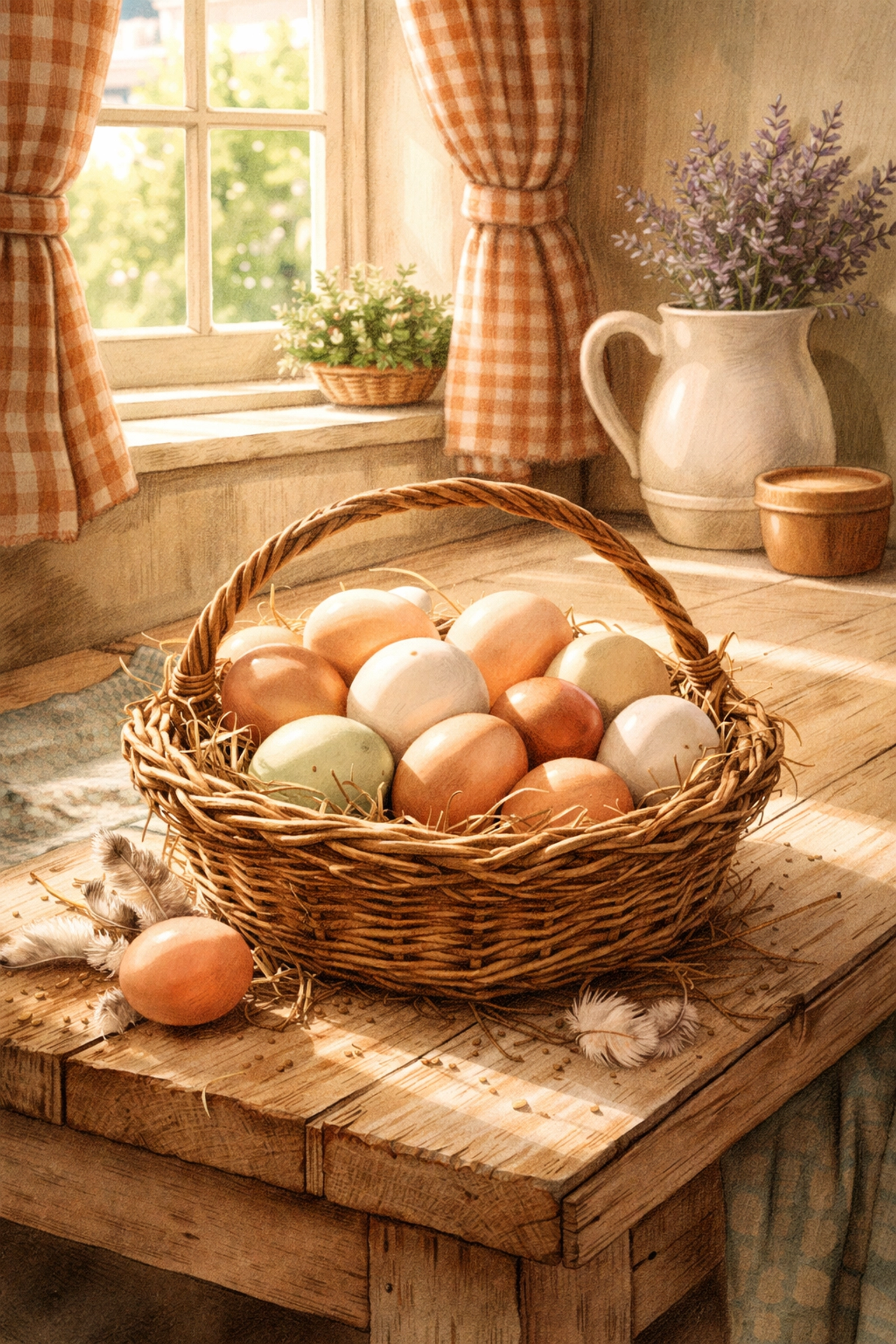
The Mystery of Green Eggs (No Ham Required)
Now, let's talk about our personal favorites: green eggs.
Yes, they're real! And no, we didn't dye them. Dr. Seuss would be proud.
Green eggs come from hens that are crosses between blue egg-laying breeds (like Ameraucanas) and brown egg-laying breeds. The result is a gorgeous olive or sage green shell that makes every egg basket feel like a work of art.
Here's how the science works:
Blue egg-laying hens produce a pigment called oocyanin that permeates the entire shell during formation. Unlike brown pigment, which coats the outside, the blue color goes all the way through. If you crack a blue egg, the inside of the shell is blue too!
When a hen inherits both the blue pigment gene AND the brown pigment gene, something beautiful happens. The shell forms with blue all the way through, and then the brown pigment is applied on top at the end.
Blue + brown = green.
The exact shade of green depends on how much brown pigment the hen produces. Some eggs are pale mint. Others are deep olive. Each one is unique.
We think it's one of the most beautiful examples of how God layers His creativity into even the smallest details of creation.
A Few Things That Can Change the Shade
While a hen's basic egg color never changes, the shade can vary slightly throughout her life.
As brown egg-laying hens get older, their eggs may become a bit lighter. Think of it like a printer running low on ink: the pigment production slows down just a little over time.
Other factors like stress, diet, and overall health can also affect how vibrant the color appears. A happy, healthy hen with good nutrition will generally lay eggs with richer, more consistent coloring.
This is one of the reasons we put so much care into how we raise our flock. Healthy hens lay beautiful eggs. It's as simple as that.
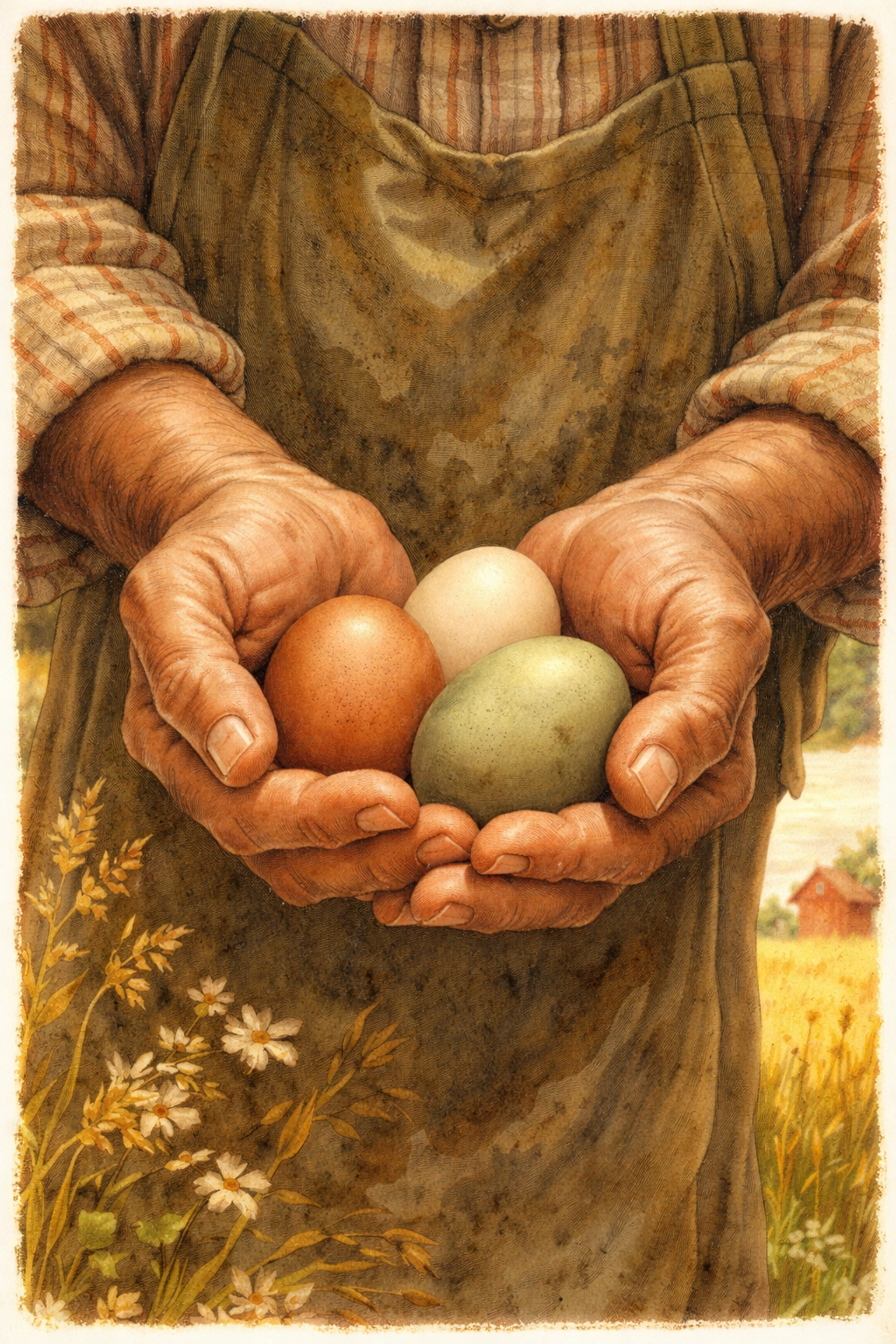
A Colorful Basket Is a Reflection of God's Creativity
We could have a flock of all one breed. Our egg baskets could be uniform and predictable.
But where's the wonder in that?
When we look at a basket full of brown, white, and green eggs, we see more than breakfast. We see variety. We see intention. We see a Creator who didn't have to make things beautiful, but chose to anyway.
The same God who painted the sunset in a hundred shades of orange and pink also designed chickens to lay eggs in a rainbow of earth tones. He didn't have to. But He did.
And every morning when we gather eggs, we get to witness that creativity firsthand.
What Really Makes Farm Fresh Eggs Special
So if color doesn't affect nutrition, what does?
The real difference between farm fresh eggs and conventional grocery store eggs comes down to how the hens are raised.
Hens that have room to roam, access to sunshine, and a varied diet produce eggs with richer yolks, firmer whites, and better flavor. Studies have shown that pasture-raised eggs often have higher levels of omega-3 fatty acids and vitamins compared to eggs from hens raised in confinement.
At Faithful Flock Farm, we raise our hens with care because we believe stewardship matters. We're grateful for these birds and the nourishment they provide. Taking good care of them isn't just good farming: it's the right thing to do.
Come See for Yourself
If you've never experienced the joy of cracking open a farm fresh egg and seeing that deep golden yolk, we'd love to share that with you.
Check out our products page to see what's available, or contact us to learn more about our farm. We're always happy to answer questions, share stories, or just chat about chickens.
And if you'd like to see our colorful flock in action, take a peek at our photo gallery. Fair warning: our hens are pretty photogenic. 🐔
We hope this little lesson on egg colors brought a smile to your face and maybe a new appreciation for that beautiful, colorful basket of eggs.
God's creation is full of surprises; even in the chicken coop.
And if you enjoy these little glimpses of life out here, there’s more coming soon. We’re sharing more stories from the farm (and all its colorful, everyday moments) in our new book, When God Plants a Farm, releasing Valentine’s weekend.
"Look at the birds of the air; they do not sow or reap or store away in barns, and yet your heavenly Father feeds them."
: Matthew 6:26
Leave a Reply